The Staring Contest
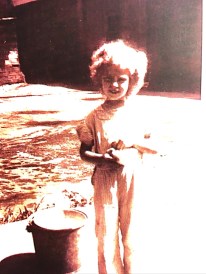
I was five when I tried to stare down the parrot in Evenson’s Tavern, a local bar where my father occasionally worked but more frequently drank. Jim, as the parrot was called, was a formidable opponent with his cold glassy eye, but there is nothing as single-minded as a five-year old with a purpose. Although I knew Jim for the better part of a year, this particular incident occurred the morning I skipped school for the first time. Neither Jim nor I began our day knowing the drama that would unfold.
Jim had an air about him. The eye of a sparrow or wren is pert; the eye of a crow, cunning; the same eye, larger, of course, in an eagle or hawk is cruel and frightening. In a parrot, the eye is a reflection of the world. At least Jim’s was. He would sit so still that I could see the entire room reflected in the blackness. His colorful plumage contrasted his black eye, and I could imagine he was stuffed, he would sit so still. His head was a brilliant green with yellow touches; his body the same green, a cloak around his yellow breast, trimmings of bright blue feathers.
This particular morning, when Jim’s cover was removed I imagine he looked through the bars of his large cage at the same long line of men he was used to seeing. Sometimes a woman or two would be present, but it was typically a male establishment. He normally spent his day dozing on his perch, and if he preened or took food, it was done slyly so he wouldn’t spoil his image of inscrutability. Jim never spoke—whether by choice or because he hadn’t been taught wasn’t known.
Occasionally one of the “regulars,” would say, “Elmer, don’t that damn bird ever say nothing?”
Elmer, the owner of the bar, and the bird due to an unpaid bar bill, would reply, “Sure, you just don’t understand bird.” And they would all laugh. Depending on who had asked the question, his time previously in the bar and the number of boilermakers he had consumed, the gentleman might wander up to Jim and say (while rocking back and forth), “Polly want a cracker?” and wait for a response. Jim, of course, would sit mute, while the rest of the line of regulars would jeer.
Jim might comment by dropping a white splat of excrement on the tray of gravel at the bottom of his cage. If the inquisitor still persisted or went so far as to poke a finger too close, Jim, with a seemingly languorous nod, would snap at the offending finger. It was said that Jim had feasted on finger tips more than once.
This particular morning, I was escorted from The Elkhorn Eat Shoppe, my Gram’s restaurant, to the corner as usual by my mother with warnings of, “don’t talk to strangers, don’t dawdle, and don’t scuff your shoes.” I was expected to complete the final two blocks to kindergarten by myself.
As I was pumping my little legs up the street and wondering how to get out of going to school (we had a substitute teacher because Miss Reinke had broken her leg) a familiar smell assailed my nostrils —Evenson’s. . .and my daddy. Raised in a tavern, the smells of stale smoke, spilled beer, sweaty bodies and cheap perfume were sweet to me.
I walked into the taproom and looked up at the long line of shirts at the mahogany bar. Colored shirts, plaid shirts, tee shirts, and suspenders. I checked for familiar feet––feet that were propped on the brass foot rail of the bar or on the stools themselves, every now and again interrupted by a polished spittoon.
“Where’s Daddy?” I asked Elmer.
Several of the men turned upon hearing my voice, and a few of the regulars called my name. “Hey you guys,” growled Elmer, “anybody seen Jack?”
Mumbles moved up and down the bar, but no one knew where he was; I decided to wait.
I made for Jim’s cage. We were acquaintances, but not friends. I’d had a nip once early on, so I knew better than to put my fingers near the cage. I would, however, stand or sit close to him and stare into his eye. I climbed on the end of the bar closest to Jim and began to stare into that shimmering black pool. If I turned just so, I could see the neon light over the mirror reflected in his eye and the color matched his feathers. Jim stared back.
I decided that it would be a contest and told Elmer, “I’m going to make Jim blink today.”
Elmer replied, “Sure, honey,” and went about his work. I stared and stared, but no blink. The line went back to conversations of what they did in the war or how much money they were going to make on this or that deal. They all but forgot about me.
I was making some headway. Jim moved one of the long talons he kept curled over the round wooden perch; I stared harder. I pushed my face as close as I dared to the cage with the steel bars-—a cage almost big enough for a five-year old girl––and clenched my teeth.
I heard some murmuring behind me, but I was too intent watching Jim to look around. There was some shushing and then quiet again. My eyelids were beginning to burn, but I stared on. All of a sudden, Jim’s eye moved––only a little, but it moved. I moved an inch closer and held my reddening eye on his black one as though we were connected––and we were. Slowly, a yellowish membrane sagged down halfway over the shining black orb––I jumped up and down––”there, he blinked; Jim blinked,” I shouted triumphantly.
There was a commotion behind me. When I turned, I saw the line had moved in behind me with my daddy in the front. There was an exchange of money going on and bottles of beer were opened and put on the bar by Elmer.
“The kid won,” my daddy was saying––”she made that goddamn parrot blink.”
“No, she didn’t,” a man named Will said, “That’s that third lid or something they have-—it’s not a real blink.” Some of the men said yeah to that, and then some said nah. Bodies began pushing, and I sat back and watched. I felt very tired from my ordeal; my eyes were teary and sore. I looked at Jim, who still had his eye in the blink. All of a sudden, with the grace of a diver, Jim toppled off his perch and disappeared with a thump. I ran up and yelled, “Help. Jim fell down, Jim fell down.” But no one paid any attention to me––they were engaged in the masculine task of collecting bets. I peeked into the bottom of the cage and saw Jim lying at the bottom––eye half closed; I tried to stare into it, the part that showed, but there was no answering reflection. “Jim,” I whispered. “I’m sorry, Jim.”
Elmer came up behind me, looked down at Jim and turned back to the melee of men. “Bet’s off, damn bird’s dead.”

 Welcome to Jackie's Website